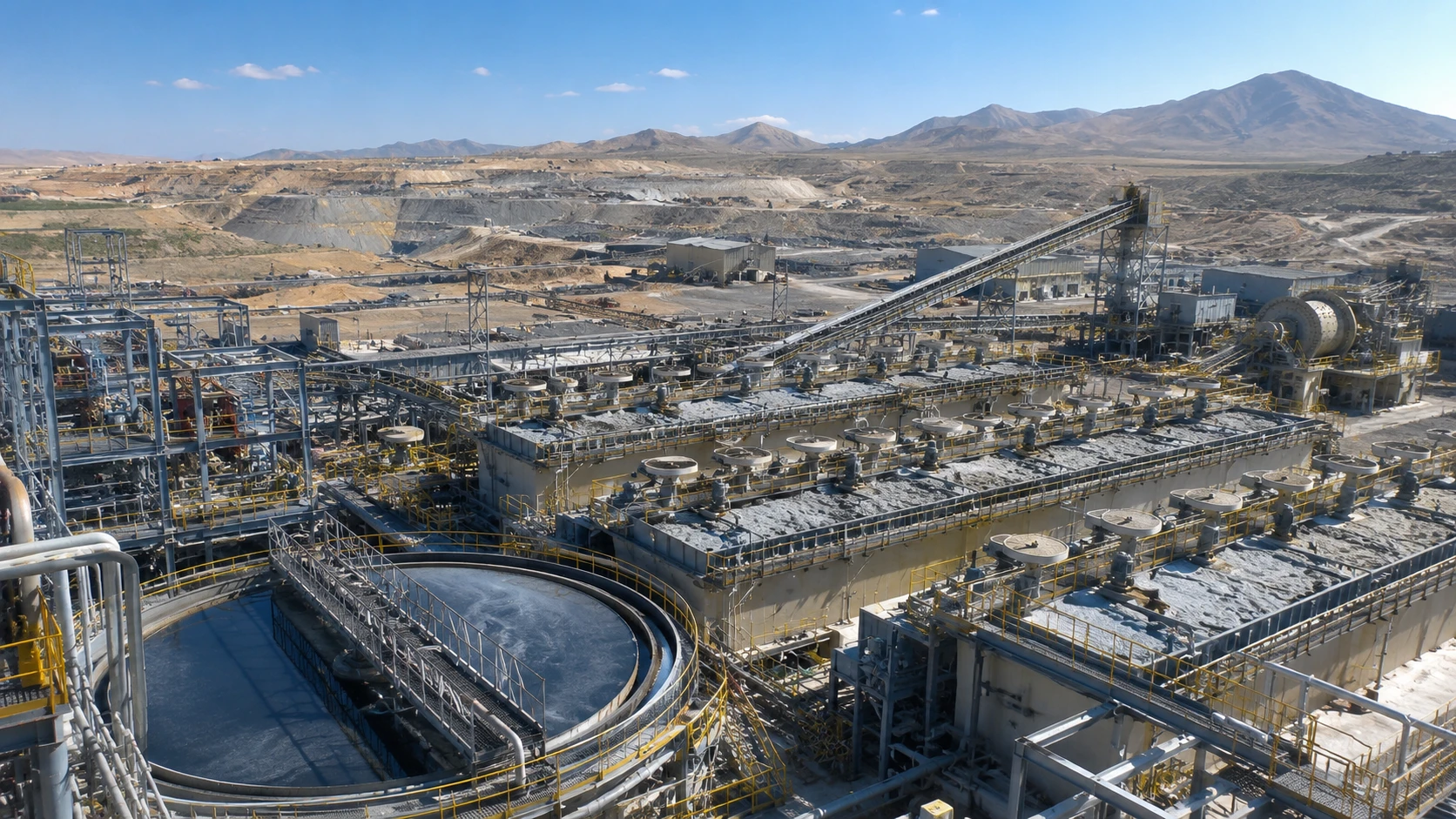
Sodium Dimethyldithiocarbamate for Mineral Processing and Flotation
Sodium Dimethyldithiocarbamate (SDD) is a dithiocarbamate-based industrial chemical with potential applications in mineral processing and selected flotation systems.
Mineral processing operations require suitable chemical reagents to support mineral separation, improve processing efficiency and manage metal-containing process streams.
SDD can be evaluated in selected mineral processing applications involving metal-bearing minerals. Its performance depends on ore mineralogy, surface chemistry, flotation conditions and the overall reagent combination.
In addition to mineral processing, SDD is used as a heavy metal precipitant in mining wastewater treatment, helping remove suitable dissolved metal ions from process water.
Zhongkerongda supplies Sodium Dimethyldithiocarbamate for industrial chemical applications, including selected mining and mineral processing requirements.
SDD Applications in Mining and Mineral Processing
Copper ore beneficiation involves separating copper-bearing minerals from gangue materials through crushing, grinding, flotation and other mineral processing operations.
Dithiocarbamate-based reagents can interact with certain metal-bearing mineral surfaces and may be evaluated in selected copper mineral flotation systems.
SDD should be assessed according to copper ore composition, mineral surface characteristics and the existing flotation reagent scheme before being selected for industrial us
Lead-zinc ores commonly contain different sulfide minerals, including galena and sphalerite, which require selective separation during mineral beneficiation.
Chemical reagents play an important role in controlling mineral surface properties and improving separation selectivity.
SDD can be evaluated in specific lead-zinc mineral processing systems where its chemical characteristics are compatible with the flotation process. Laboratory flotation tests are recommended to determine its actual performance.
Gold ores may contain associated sulfide minerals and other metal-bearing components that require appropriate beneficiation processes.
Selected dithiocarbamate reagents may be investigated in mineral separation systems involving gold-associated sulfide minerals.
The suitability of SDD depends on ore characteristics, associated minerals, processing chemistry and the required separation results. It should not be considered a universal gold flotation collector.
Mining and mineral processing generate wastewater containing suspended solids, dissolved metals and residual process chemicals.
SDD can serve as a heavy metal precipitant in suitable wastewater treatment systems. It can react with certain dissolved metal ions to form insoluble compounds that can subsequently be removed through solid-liquid separation.
Potential applications include:
● Copper-containing mining wastewater.
● Lead and zinc processing wastewater.
● Metallurgical process water.
● Mineral beneficiation wastewater.
● Mine wastewater treatment systems.
Advantages of SDD in Mining-Related Applications
● Metal Interaction: Can react with suitable metal ions and support heavy metal precipitation.
● Industrial Applications: Has potential uses in selected mineral processing and flotation systems.
● Wastewater Treatment: Supports the treatment of metal-containing mining wastewater.
● Process Compatibility: Can be evaluated alongside other mining chemical reagents based on ore and water characteristics.
SDD Supply for Mining and Mineral Processing
Zhongkerongda supplies Sodium Dimethyldithiocarbamate for mining-related industrial applications, including heavy metal treatment and selected mineral processing requirements.
Contact our team to discuss product specifications, application conditions and bulk supply requirements.
CTA: Contact Zhongkerongda for SDD Mining Chemical Specifications and Quotations.
Mobile/Wechat:+8616678980013
E-mail: [email protected]
Copyright © 2025 by Qingdao Zhongke Rongda New Materials Co., Ltd. All Rights Reserved Designed by Huishang